Pros and Cons of Debt Settlement Explained Clearly
A credit card balance can feel manageable at first. Then the minimum payment rises, interest keeps adding to the account, and several payments compete with rent, food, utilities, and other necessities. A household may be making every payment yet watching the balances barely move.
That pressure explains why many people search for the pros and cons of debt settlement. Settlement can reduce the principal owed, but it usually requires a consumer to accept serious credit damage, creditor uncertainty, and a long recovery period. The important question isn't whether settlement sounds attractive in general. It's whether the expected benefit still makes sense after completion risk, fees, interest, taxes, and alternatives are included.
This guide treats settlement as a decision to test, not a product to buy. It explains how the process works, why the timeline can extend from 24 to 48 months according to Debt Help U's settlement guidance, and how the answer changes when a person's credit is already damaged. It also compares settlement with consolidation, debt management plans, and bankruptcy before outlining a private way to examine affordability.
Table of Contents
- Introduction to Debt Settlement Decisions
- How Debt Settlement Works in Plain Language
- Potential Benefits of Debt Settlement
- Risks Costs and Credit Impact to Weigh Carefully
- Debt Settlement Compared to Other Relief Options
- Real World Scenarios When Settlement Makes Sense or Not
- How to Decide and Check Your Options Privately
Introduction to Debt Settlement Decisions
A household may stop using its credit cards and still struggle each month. Minimum payments keep the accounts current, yet interest can leave the balances moving down slowly. In that situation, settlement may seem like a way to reduce the amount owed, but the headline reduction is only the beginning of the calculation.
A settlement company or attorney may negotiate with creditors, request payment below the full balance, and arrange deposits for future offers. The result depends on several conditions: the consumer must keep funding the program, creditors must consider the proposals, and accepted settlements must be paid. If any of those steps fails, projected savings may never become actual savings.
Federal Trade Commission material cites trade-association data reporting more than $531 million in consumer debts settled in 2008 and more than $415 million during the first half of 2009. The reported average reductions were 55% and 58%, respectively. The same FTC public-comment material describes low completion in some datasets, including a Colorado dataset in which fewer than 10% of consumers completed programs from 2006 to 2008.
The figures illustrate the central risk. A settlement offer is like a discount available only after the buyer can finish the payment plan. Enrollment alone does not produce the benefit.
Core decision rule: A large reduction for consumers who finish does not automatically make settlement a good choice for everyone who enrolls.
The right comparison starts with the consumer's current position. Stable income and a workable repayment capacity may favor a structured plan that protects credit more effectively. Overwhelming unsecured debt, limited ability to repay, and already-damaged credit can change the calculation. A person who is already behind may weigh additional credit harm differently from someone with strong credit and current accounts.
Use private affordability calculators before sharing contact information. Test whether the proposed deposit fits after housing, food, utilities, and other necessities, then account for fees, possible balance growth, tax exposure, and the chance that one or more creditors rejects an offer. The Debt Help U guidance on whether debt settlement is a scam can provide background for that review.
| Question | Debt settlement answer |
|---|---|
| Main objective | Resolve eligible unsecured debts for less than the full balance |
| Potential benefit | Principal reduction and a structured path toward resolving accounts |
| Main cost | Fees, possible balance growth, tax exposure, and credit damage |
| Main uncertainty | Creditors do not have to accept settlement offers |
| Most important test | Whether the consumer can complete the program and tolerate the credit consequences |
How Debt Settlement Works in Plain Language
Debt settlement is a negotiation to resolve eligible unsecured debt for less than the amount owed. It differs from consolidation, which usually replaces several debts with a new loan, and from a debt management plan, which typically aims to repay enrolled debts in full under revised terms.
The usual sequence
The process usually follows these steps:
Review eligible accounts. Settlement generally concerns unsecured obligations, such as credit card debt and some personal or medical debts. A mortgage or vehicle loan is secured by collateral and usually calls for a different approach.
Set aside money for offers. Rather than sending the regular payment to each creditor, the consumer may place money in a dedicated account or another program structure. Those accumulated funds support negotiated offers.
Accounts become delinquent. Negotiations commonly begin after missed payments or charge-off activity. The FTC's debt-settlement workshop material notes that accounts can remain delinquent during negotiations, while interest, penalties, and late fees continue to accrue.
A creditor reviews an offer. The creditor may accept, reject, or delay a proposal. No creditor must settle. One account might be resolved while another remains in collections or moves toward legal action.
The consumer approves and funds the agreement. An offer is not fully settled because a provider says negotiations succeeded. Before approving payment, the consumer should confirm the settlement amount, timing, fees, and account status.
The process repeats. Accounts may be negotiated at different times, so a program can last months or years, especially when deposits are small or creditors respond slowly.
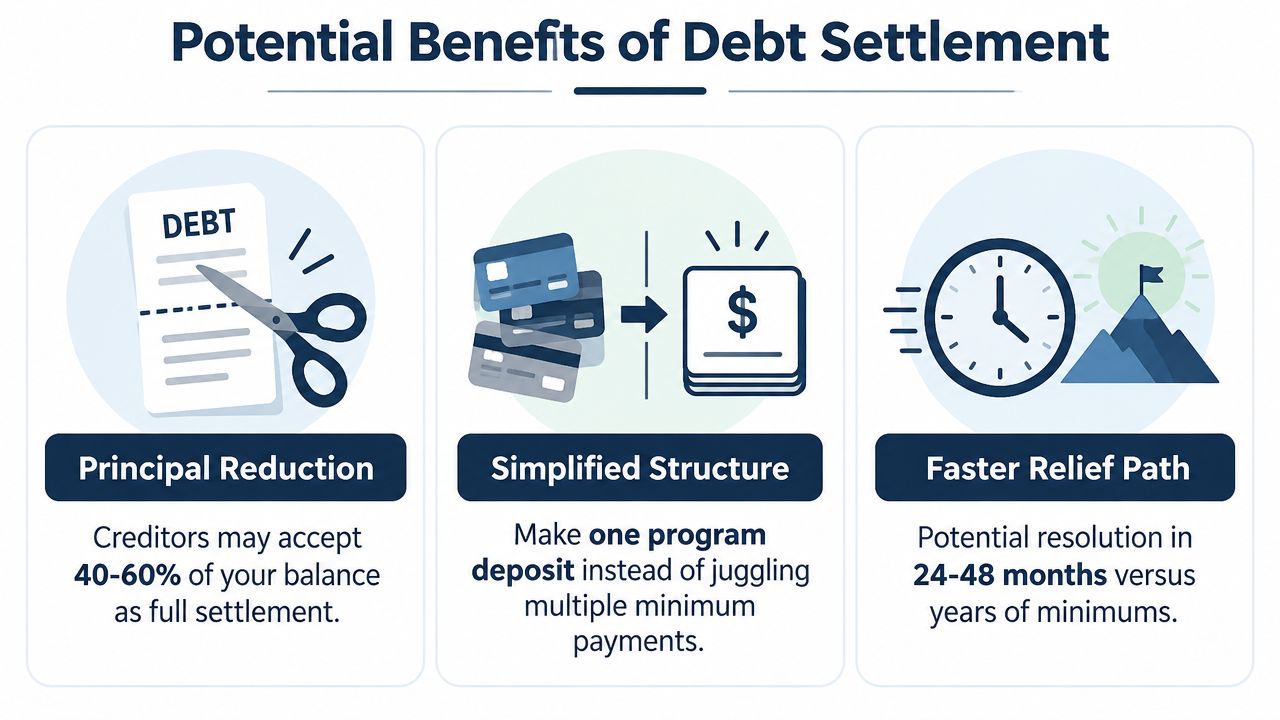
The program label can hide the practical tradeoff. One deposit may feel easier to manage than several minimum payments, yet it does not create the cash needed to fund settlements. Creditors may still contact the consumer or pursue legal remedies while accounts remain unresolved.
Completion risk should be tested before enrollment. A proposed deposit needs to fit after housing, food, utilities, and other necessary expenses. If it works only in a month without an emergency, the plan may fail before enough funds accumulate for offers. A private calculator can help test that budget before the consumer shares contact information.
Potential Benefits of Debt Settlement
A household with several unaffordable unsecured debts may see settlement as a way to reduce the amount it ultimately repays. The main potential benefit is principal reduction. If a creditor accepts less than the full balance as a final resolution, the consumer may avoid repaying the entire enrolled amount. That can create a path forward when interest and minimum payments have made ordinary repayment unrealistic.
The historical averages cited in the introduction provide context, not a forecast for an individual account. They apply to debts that were settled, not to every account enrolled in a program. Completion changes the calculation: a consumer must compare the possible reduction with the deposits, fees, and time required to reach a settlement.
Why completion changes the math
Settlement savings exist only after a creditor accepts an offer and the consumer fulfills it. Someone may compare an enrolled balance with a proposed settlement amount and see a large difference. That apparent saving is not a realized benefit if the consumer cannot keep funding the program until negotiations finish.
The FTC material cited earlier reports that 65.2% of dropouts had no debts settled at all. For those consumers, the principal reduction was zero, even though they may have faced delinquency, collection activity, and credit damage during the process. A completer may realize savings on a settled account. A dropout with no settled debts receives none of that benefit, so completion risk belongs in the affordability test from the start.
The central tradeoff is simple: settlement can produce meaningful reductions for people who finish, but the expected benefit falls sharply when completion is unlikely.
A program may also simplify administration. Instead of tracking several creditor due dates, a consumer may make one planned deposit while the provider handles negotiations. That arrangement can reduce administrative strain, but it does not guarantee that every account will settle or that the deposit will remain affordable.
When the benefit is most relevant
Settlement may deserve consideration when unsecured debt is overwhelming and the household cannot support full repayment, even after spending changes, lower-interest arrangements, or direct hardship requests. The math is weaker when the proposed deposit leaves no room for necessary expenses or emergencies.
A clear target can also feel easier to manage than open-ended minimum payments. That emotional relief matters, but it should be weighed against delinquency and the possibility that a creditor refuses to settle.
Before sharing contact information, the consumer can use a private calculator to test whether deposits remain affordable after housing, food, utilities, and other necessary costs. The practical question is not only how far balances might fall. It is whether the household can reliably fund the process, tolerate an unresolved account, and finish enough settlements for the savings to outweigh the costs.
Risks Costs and Credit Impact to Weigh Carefully
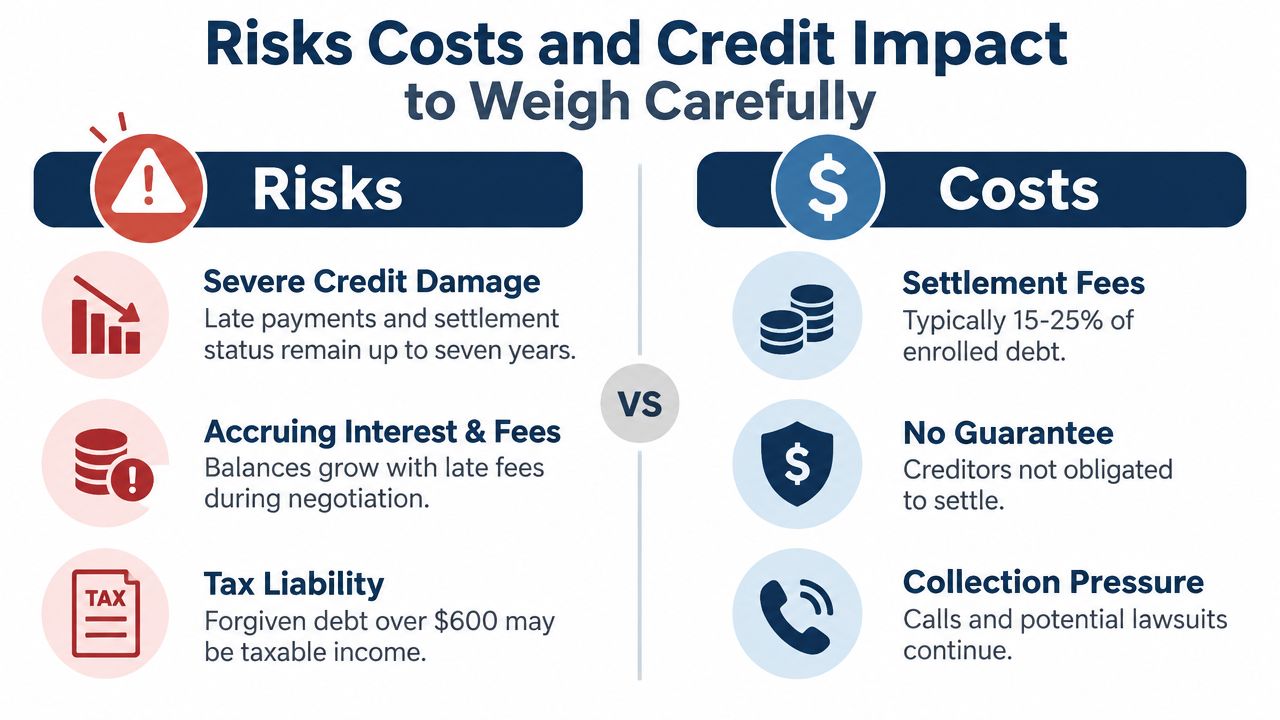
A settlement plan can look affordable on paper and still fail if the household cannot fund it until agreements are completed. The consumer often stops making regular payments before knowing whether creditors will accept negotiated offers. Missed payments can damage credit, trigger collection activity, and increase balances through continuing interest and fees. Because negotiations may take months or years, the exposure can extend well beyond one missed payment.
The Consumer Financial Protection Bureau's explanation of debt-relief programs says debt settlement can negatively affect credit scores and future access to credit. Under Fair Credit Reporting Act rules, most negative information, including settled accounts and collections, can generally remain on credit reports for up to seven years from the delinquency date.
Credit damage isn't a side effect
Credit damage affects more than a score. Future lenders, landlords, insurers, and service providers may review credit history under their own rules. Someone planning to apply for housing, refinance, purchase a vehicle, or obtain affordable credit should include that disruption in the decision.
The problem can remain while the plan is unfinished. Each unresolved account may have its own delinquency history, collection status, and negotiation timeline. Settlement can exchange immediate payment pressure for a prolonged period with less access to borrowing.
Balance growth and collection pressure
Stopping direct payments does not freeze an account. Interest, late fees, penalties, and collection charges may continue until resolution, as described in the FTC workshop material cited above. A lower eventual payoff may still be possible, but the balance can grow before an agreement is reached.
Creditors also retain legal options. Collection calls, letters, and lawsuits can continue while funds accumulate. Court papers require prompt attention from a qualified attorney. A consumer should not assume that a settlement company will respond to a lawsuit or protect against every creditor action.
Fees and tax exposure
Fee rules offer a safeguard, but settlement still has costs. Under the FTC's Telemarketing Sales Rule guidance, U.S. debt-relief providers generally cannot collect a fee until they achieve a successful result on at least one debt, the consumer agrees to that result, and the consumer makes a payment tied to the settled debt.
The same guidance notes that many clients end programs before completion and cites industry data showing completion rates roughly ranging from 35% to 60%, averaging about 45% to 50%. Delayed fee collection may reduce upfront risk, yet deposits, fees, and growing balances can still consume money without resolving every account. Completion risk should therefore be tested before contact information is shared, using a private calculator and a budget that includes necessary expenses and emergencies.
Forgiven debt can raise tax questions. The National Consumer Law Center's 2025 issue brief notes that forgiven balances may be treated as taxable income, subject to the facts and applicable rules. A tax professional can explain how a particular settlement may affect a return.
Debt Settlement Compared to Other Relief Options
Debt settlement works best when the household can finish the program and full repayment is not realistic. Compare it with the household's income, credit starting point, debt type, and ability to keep funding payments. The program name alone does not show which risk is manageable.
| Option | Typical Timeline | Cost Structure | Credit Impact |
|---|---|---|---|
| Debt settlement | Often 24 to 48 months, varying by account and funding ability | Negotiated payoff, provider fees, possible late charges, and potential tax consequences | Delinquencies and settlement status can cause serious damage |
| Debt consolidation | Varies by loan terms and repayment capacity | New loan interest and any applicable lender fees | May be less disruptive when payments remain current, but missed payments still harm credit |
| Debt management plan | Structured repayment over a defined period | Agency setup and monthly service fees may apply, along with interest under revised terms | Can involve account closures and short-term effects, while on-time repayment supports recovery |
| Bankruptcy | Depends on chapter, court process, and individual circumstances | Court, attorney, and case-related costs may apply | Significant public-record and credit consequences |
A consolidation loan combines balances into one new payment. Approval, interest, and fees depend on the borrower's qualifications and loan terms. Keeping payments current may limit credit disruption, while missed payments still cause harm.
A debt management plan uses structured repayment and may reduce interest or simplify payments under revised terms. It generally requires repayment of the full enrolled debt. That can suit a household with steady income and repayment capacity that wants to preserve more flexibility than settlement may allow.
Bankruptcy follows legal procedures and can address debts and creditor actions in ways informal settlement cannot. It may deserve comparison when debts are overwhelming, lawsuits are active, or there is no credible way to fund negotiated settlements. Court, attorney, case-related costs, public records, and credit effects all require careful review.
Settlement becomes more relevant when full repayment is unaffordable, but its math depends on completion. A lower negotiated balance does not help if deposits stop before accounts are resolved. Before sharing contact information, use a private calculator to test monthly funding against necessary expenses, emergencies, and the program timeline.
A consumer can use this comparison of settlement, consolidation, and bankruptcy to organize questions for a qualified attorney or nonprofit counselor. The right comparison is not which option sounds easiest. It is which payment path the household can complete, and which credit and legal consequences fit its starting position.
Real World Scenarios When Settlement Makes Sense or Not
Two households can owe similar credit card balances and still need different solutions. Compare payment capacity, starting credit condition, debt type, and the likelihood of completing the plan. Completion risk is the dividing line: a settlement target has little value if deposits stop before agreements are funded.
A household already facing serious credit damage
A household with high utilization, repeated late payments, and difficulty covering minimums may already have limited access to affordable credit. If its budget cannot support full repayment, settlement may reduce principal, but only if the household can maintain deposits through resolution.
The starting credit position changes the tradeoff. Someone planning to apply for a mortgage soon may avoid settlement to limit further disruption. Someone focused on ending an unaffordable debt cycle may accept more credit damage in exchange for a possible reduction in balances.
Starting-point test: Settlement may add less incremental credit harm after serious delinquency has already occurred. Collection activity, lawsuits, tax consequences, and failure to complete the plan remain possible.
A household with steady income and high interest costs
A household that covers essential expenses and debt payments, yet sees balances fall slowly because of high APRs, may have better choices. A debt management plan, direct hardship negotiation, consolidation, or accelerated repayment can preserve regular payment activity while addressing interest costs.
If the household can keep paying, intentionally allowing delinquency may sacrifice credit benefits without resolving an unavoidable affordability problem. Before choosing settlement, use a private calculator to test whether full repayment fits the budget, including emergencies and changing expenses.
A household with mixed debts and lawsuit concerns
A third household may have credit cards, a secured vehicle loan, and an account tied to legal correspondence. Settlement may apply to some unsecured debts, but it does not automatically resolve the vehicle loan or provide legal representation.
Court papers require prompt attention. Separate debts by type, confirm which accounts may qualify, and seek legal advice about active litigation before relying on a general settlement plan. The infographic comparing the pros and cons of choosing a legal settlement versus going to trial can help frame that comparison, but it cannot replace account-specific advice.

How to Decide and Check Your Options Privately
A sound decision begins with affordability, not an advertised reduction. List each unsecured balance, interest rate, minimum payment, account status, and cash available after essential expenses. Settlement only works if the payment plan can reach completion. A lower balance does not help if deposits stop before creditors agree.
Use this checklist:
- Measure repayment capacity: Can the household repay without new borrowing?
- Assess debt-to-income pressure: Compare required debt payments with gross income, while treating DTI as one affordability measure rather than the whole answer.
- Identify hardship severity: A temporary shortfall may fit creditor hardship options. A lasting shortfall needs a broader plan.
- Protect major priorities: Consider housing, a vehicle, employment, and future credit needs before accepting lasting credit consequences.
- Test completion: Would the proposed deposit remain affordable during an emergency, income interruption, or unexpected expense?
- Check legal and tax exposure: Review collection notices and ask a qualified professional about possible tax treatment before agreeing.
Private calculators can help compare payoff dates, extra payments, and settlement costs before you share contact information. Debt Help U's debt settlement calculator provides an educational estimate of settlement costs, fees, and possible tax on forgiven debt. Its calculators work without a login or phone number, with inputs kept in the browser. A six-question assessment can also outline options, while any vetted referral is requested separately and availability varies by U.S. state.
The result is a starting estimate, not a promise. It cannot predict creditor decisions or guarantee approval, but it can show whether the settlement math appears workable.
Debt Help U offers plain-language guides, no-login debt calculators, payoff projections, and comparisons of settlement, consolidation, and bankruptcy. Visit Debt Help U to test affordability and possible timelines privately before contacting a debt-relief provider.
Related guides
- Is debt settlement a scam? How to tell a real company from a predator Federal law already bans the most common predatory practice. Knowing that one rule screens out most bad actors in a single question.
- How debt relief companies get paid Fee structures, the federal rule that bans charging you upfront, and what to demand in writing before you sign. How the industry actually makes money.
- The 1099-C: why forgiven debt can be taxed, and when it is not Settled debt can count as income. But most people who settle are insolvent when it happens, and insolvency can wipe the tax out entirely.