Debt Consolidation vs Debt Management Which Saves More
You're staring at a stack of minimum payments, and every card seems to want a different amount on a different day. One card is at the minimum, another one jumped again, and the total still doesn't look like it's moving. That's the moment people start asking whether debt consolidation vs debt management will save money, or just rearrange the same problem into a cleaner monthly bill.
The answer is not “one payment is always better.” A single payment can help, but only if the path behind it matches the debt, the credit profile, and the actual cost after fees. Debt consolidation is new borrowing. Debt management is a structured repayment service. Those are not the same thing, and choosing the wrong one can leave a borrower paying more, losing flexibility, or both.
| Criteria | Debt Consolidation | Debt Management Plan |
|---|---|---|
| Core idea | Replaces multiple debts with a new loan | Uses one monthly payment through a counseling plan |
| Money flow | New lender pays off old balances | Borrower pays agency, agency pays creditors |
| Main cost driver | APR, term length, origination fee | Setup fee, monthly fee, creditor concessions |
| Credit access | Depends on underwriting and credit quality | Usually more accessible, but cards are typically closed |
| Best fit | Borrowers who qualify for cheaper new debt | Borrowers who need structure, concessions, and full repayment |
Table of Contents
- Introduction Is One Payment Always Better
- How Debt Consolidation and Debt Management Work
- Detailed Comparison Across Fees Timelines and Credit Impact
- Total Cost Analysis When Consolidation Really Saves Money
- Credit Eligibility and Account Flexibility Trade Offs
- Real World Use Cases and Which Path Fits Best
- Recommendation and Next Steps to Choose With Confidence
Introduction Is One Payment Always Better
The cleanest mistake people make is assuming that fewer bills automatically means a better deal. That's how someone with high-rate credit cards ends up signing for a new loan that looks simpler but doesn't save much once fees and term length are counted. The number of payments drops. The total cost doesn't necessarily.
A borrower carrying several revolving balances is usually trying to solve two separate problems. One is the monthly cash squeeze. The other is the interest drag that keeps balances alive longer than they should be. Debt consolidation attacks the first problem by replacing debts with new borrowing. Debt management attacks the second problem by negotiating repayment terms inside a structured plan.
That difference matters because the wrong choice can make the debt feel more manageable while the total payoff gets worse. A lower monthly payment can come from a longer term, not from a real saving. A structured payment plan can feel tighter month to month, but still cost less overall because it is built around repayment discipline instead of fresh borrowing.
Practical rule: if the new loan does not come in materially below the card rate after fees, consolidation is just a reshuffle.
The cleanest way to think about this is simple. Consolidation is a refinancing decision. Debt management is a repayment decision. One depends on what a lender will underwrite. The other depends on what a counselor can negotiate and what the household can sustain.
A lot of comparison pages stop at “one payment versus one payment.” That's too shallow. The question is whether the borrower should take on new debt, or use a structured repayment service that keeps the principal intact and trims the path to payoff. That's the lens that keeps people from choosing the prettier product instead of the cheaper one.
How Debt Consolidation and Debt Management Work
Debt Consolidation Means New Borrowing
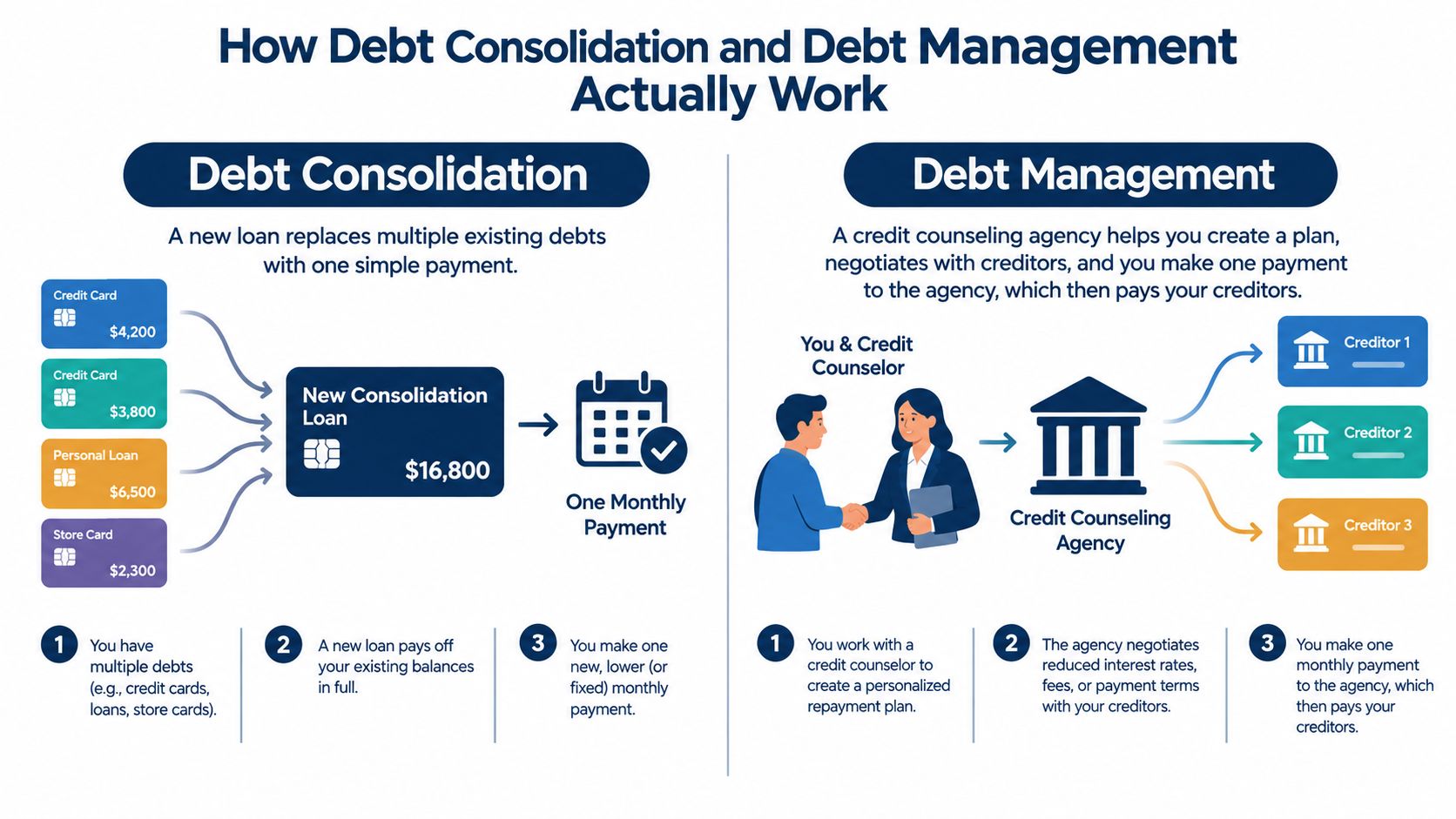
With consolidation, the borrower takes out a new loan and uses it to pay off old debts. The old cards stay on the credit file, but the balances are replaced by one installment loan with a fixed term. The lender, not the card issuer, now controls the repayment structure.
A personal loan is the most common version. Balance transfer cards are another version, though they are still new credit and still depend on approval. Either way, the borrower is shopping for a rate, not a repayment service. The true test is whether the new APR, plus any origination fee, beats what the revolving cards were charging.
The money flow is simple. The lender advances the funds, the balances are paid off, and the borrower makes one fixed monthly payment until the loan is gone. If the rate is low enough, that can cut interest cost and simplify the budget. If the rate is not low enough, the borrower has only traded one debt structure for another.
Debt Management Means Structured Repayment
A debt management plan works differently. A credit counselor sets up a monthly plan, the borrower makes one payment to the agency, and the agency sends money to creditors under negotiated terms.
The FTC describes these plans as monthly payment arrangements where the counselor acts as a liaison to lower interest rates or forgive fees. Federal rules bar fees before there's a written agreement and at least one payment under it. See the FTC's guidance on the Debt Relief Services Telemarketing Sales Rule.
That structure is why DMPs are often paired with counseling. The borrower is not borrowing new money to pay old bills. The borrower is working through an organized repayment channel that depends on creditor concessions and regular monthly discipline. The debt stays debt, but the repayment path gets tighter and more controlled.
Detailed Comparison Across Fees Timelines and Credit Impact
| Criteria | Debt Consolidation vs Debt Management At a Glance | Debt Consolidation | Debt Management Plan |
|---|---|---|---|
| Rate logic | Which one is cheaper after fees and term | Depends on loan APR versus card APR | Depends on negotiated concessions |
| Upfront cost | What gets charged at the start | Often an origination fee | Usually a setup fee |
| Ongoing cost | What keeps showing up every month | Principal and interest on a fixed loan | Administrative fee plus repayment amount |
| Account access | Can cards still be used | Usually yes, if the lender and issuer allow it | Usually no, enrolled cards are closed or blocked |
| Repayment style | What kind of commitment it creates | Fixed installment debt | Structured repayment through counseling |
| Credit effect | Short-term trade-off | New inquiry and new debt | Utilization pressure if cards are closed |
Debt consolidation is new debt. A DMP is a repayment service that aims to pay the full principal through creditor concessions.
Fees and Payment Structure
Consolidation is set by the loan offer. Consumer finance guidance says consolidation APRs commonly range from roughly 6% to 36%, with origination fees of about 1% to 8% reducing the amount disbursed (The Finance Tree). That is why the headline rate is not enough. The fee changes the actual cost, and the term can change it again.
A DMP charges in a different way. If you want the fee mechanics behind that model, see how debt relief companies get paid. FTC guidance says federal rules bar fees before a written agreement and at least one payment, and counseling guidance commonly puts setup fees around $0 to $75, with monthly administrative fees often capped in many cases at $79, though some states cap them lower. Those are service costs, not borrowed-money costs. The point is to compare them against the interest relief the counselor can negotiate.
Credit Access and Flexibility
Consolidation usually leaves more room to use accounts, because the borrower is outside a formal counseling plan. That flexibility has a cost. It can help during a temporary cash squeeze, and it can also make it easy to rebuild balances.
A DMP takes that option away by closing enrolled cards or blocking new use while the plan is active. That restriction is the trade-off. The plan swaps card access for repayment discipline, and borrowers who need guardrails often do better with that structure than with a fresh loan. On the loan side, the trade-off is different. A lender may still expect a clean payment history and enough income to qualify, so the choice is not just about repayment style, it is about credit eligibility too.
The Break-Even Question
The right test is total cost after fees, not the size of the monthly payment. A lower installment can still lose if the loan stretches repayment too far or the fee eats up the savings. Use the Debt Help U consolidation loan calculator to compare the new loan payment against the old card costs, then check whether the fee and term still leave you ahead.
For many borrowers, that is the whole decision. New borrowing only makes sense when the rate gap is wide enough to beat the fee and the repayment term does not drag the balance out longer than the cards would have. A DMP makes more sense when credit access is shaky, the borrower needs structure, or the counselor can cut enough interest to offset the monthly service cost.
Total Cost Analysis When Consolidation Really Saves Money
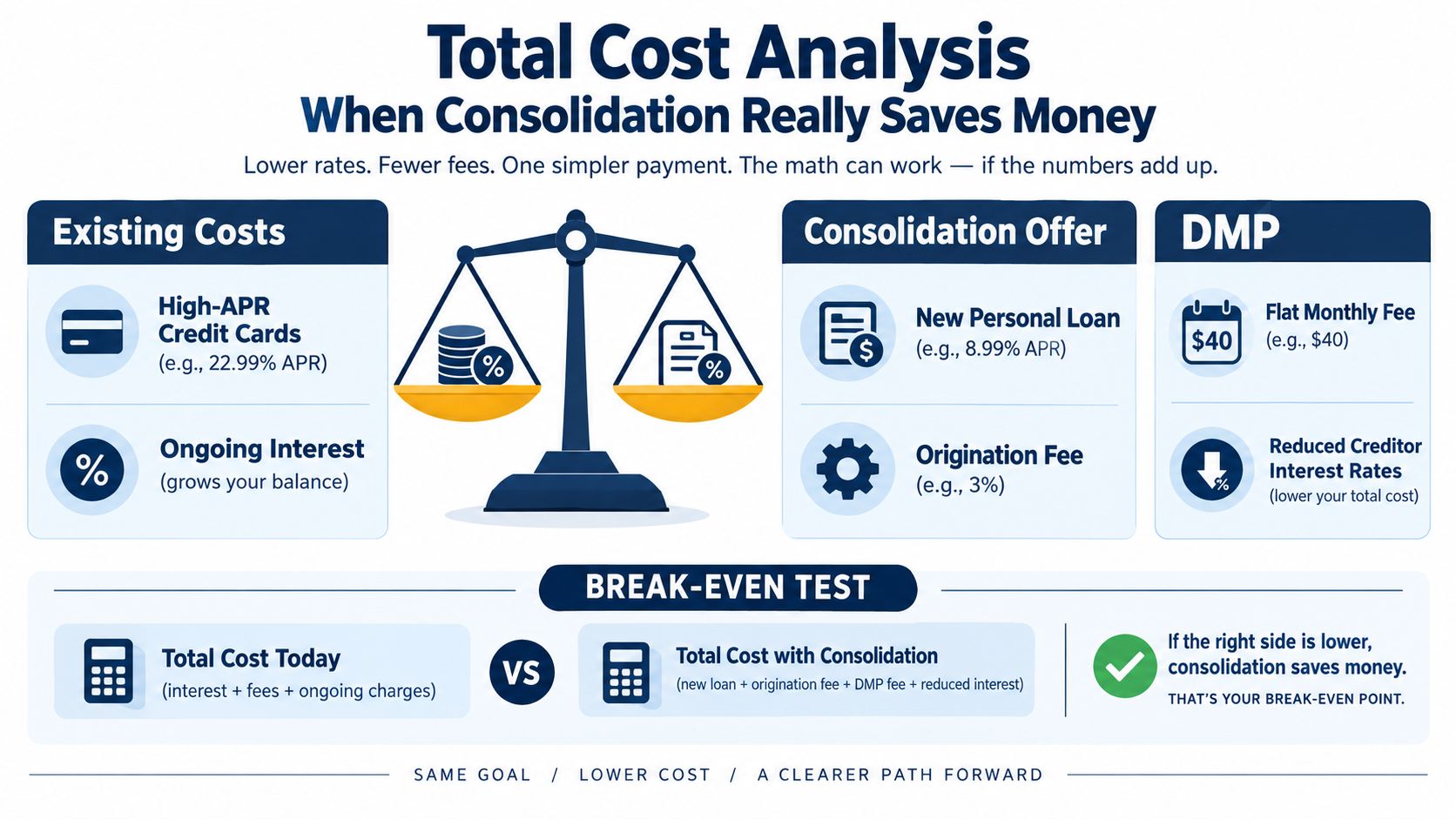
The cheapest option is the one that cuts total financing cost, not the one that feels easiest in month one. That's why borrowers need a break-even test. Compare the existing card APRs against the new loan APR, then add the origination fee and measure the result over the full repayment term. If the term stretches too long, a lower payment can still cost more.
The Federal Reserve benchmark in the brief makes the rate spread obvious. Credit card accounts assessed interest averaged 22.15% APR, while a 24-month personal loan at commercial banks averaged 11.86% APR, a spread of 10.29 percentage points (Federal Reserve G.19, Terms of Credit). That is the kind of gap that can make consolidation worthwhile. If the new loan rate is not materially below the card rate, the borrower may just be swapping one expensive structure for another.
DMP economics work differently. The counselor is trying to reduce rates or fees through concessions rather than lending new money. CFPB reporting covered counseling-based debt management plans over a 13-year period from 2007 through 2019, which shows how long this repayment model has remained relevant in consumer credit stress cycles (CFPB report). In most cases, the borrower still repays the principal in full, just under a tighter schedule.
A reasonable way to think about it is this. Consolidation can win when the new rate is meaningfully lower and the fee is modest. A DMP can win when the borrower needs a structured path, can keep making regular payments, and would rather avoid layering new interest-bearing debt on top of old balances.
The 24-month comparison also matters because term length changes the math. A lower monthly bill over a longer timeline can look friendly while raising total cost. That's why the only honest comparison is full-term cost, not payment size alone.
Credit Eligibility and Account Flexibility Trade Offs
Who Usually Qualifies
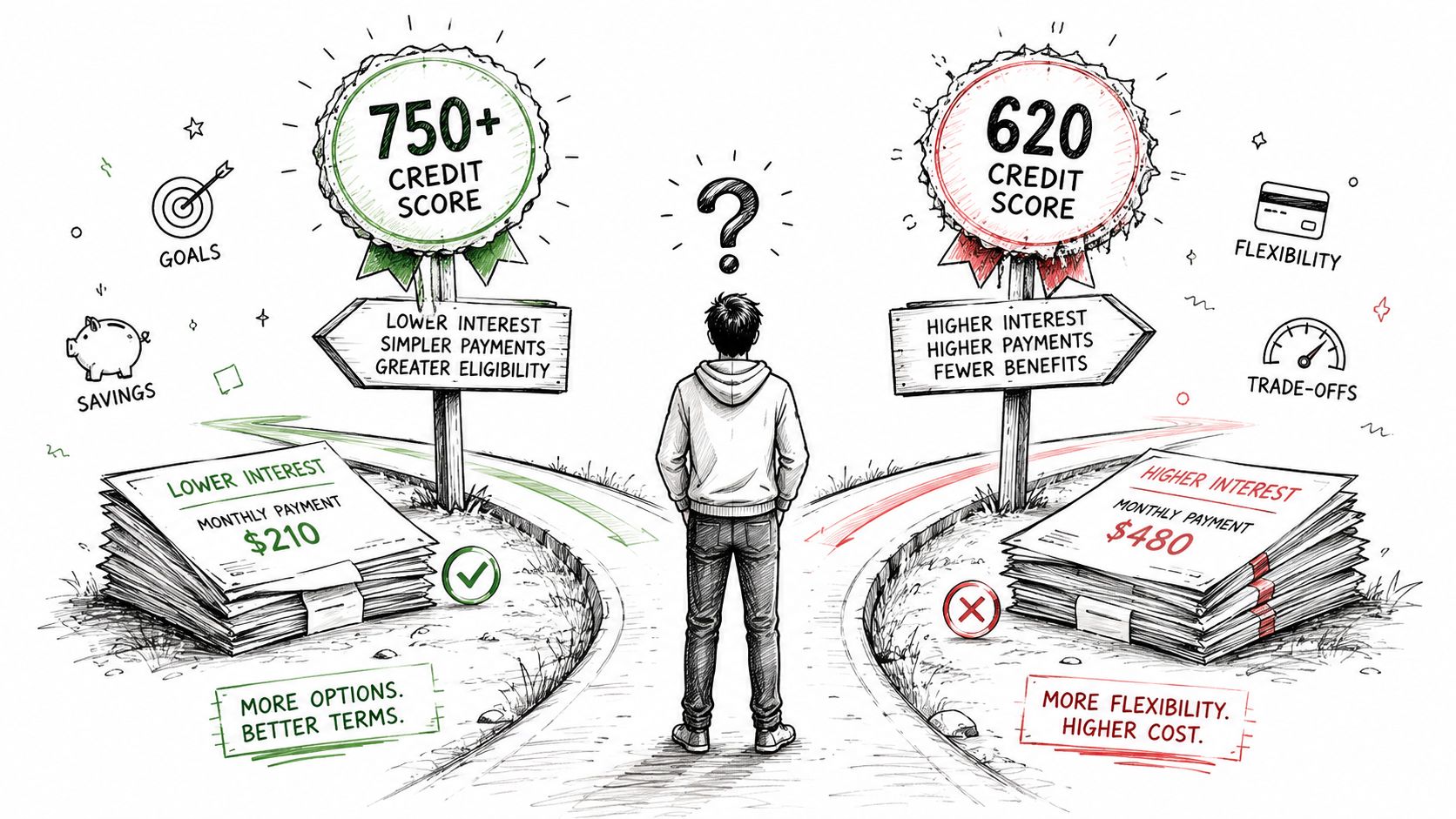
Consolidation is a credit-backed loan, so the lender sets the price. Strong credit typically secures better terms, while weaker credit often results in a rate that is too high to justify the move. As noted earlier, the point is not approval alone. The point is whether the new loan beats the old card debt after fees and term length.
DMPs work differently. They rely on counseling and creditor concessions, so they are more forgiving on access and less dependent on a strong credit file. That makes them a practical fit for borrowers who need structure but cannot qualify for decent loan pricing. They also stay focused on unsecured debt, especially credit cards.
If the file cannot support fair loan terms, do not force consolidation just to keep a few cards technically open.
What Happens to Cards and Utilization
A DMP usually requires enrolled cards to be closed or left unused. That cuts flexibility, but it also blocks new spending from wrecking the payoff plan. The trade-off is simple, less freedom now, more control over the debt.
Consolidation usually leaves more room to keep using cards, which is exactly why it can backfire. If the old cards stay open and spending continues, the debt problem returns fast. The loan did its job. The budget did not.
How to Check Affordability
Debt-to-income is the quickest reality check for either path. If your current debt already strains cash flow, a new installment loan can still be too tight even when the APR looks better. Use the Debt Help U DTI guide to compare the proposed payment against what you already owe each month.
Ask the only question that matters: can this be carried without falling back into the same cycle? If the answer is no or even shaky, a structured repayment plan usually makes more sense than fresh borrowing.
Real World Use Cases and Which Path Fits Best
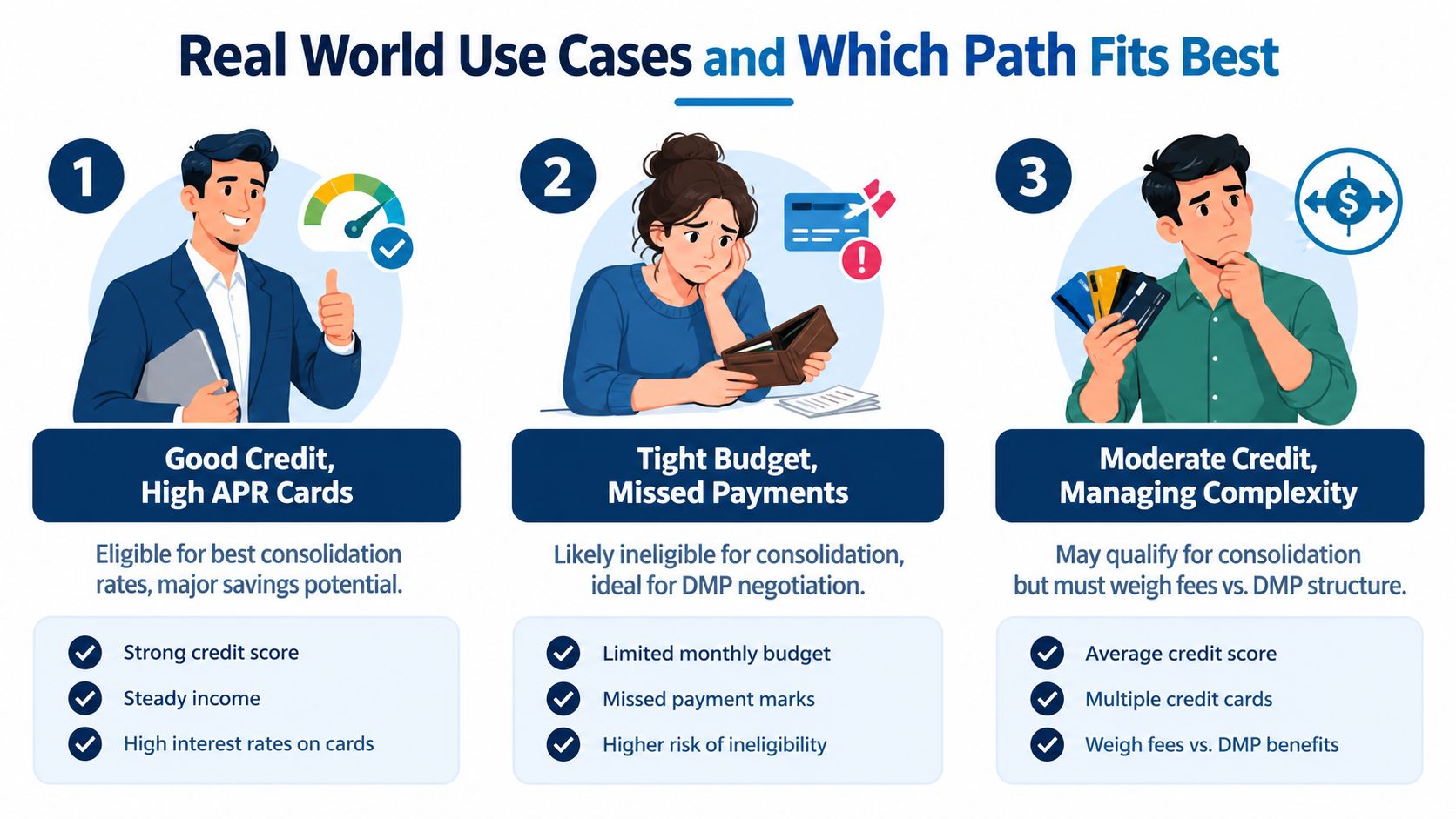
A borrower with steady income, decent credit, and expensive card balances usually belongs on the consolidation side. That's the profile where the rate spread can do real work, especially if the new loan comes in well below the revolving APR. If the offer is clean and the borrower won't keep using the old cards, consolidation can be the sharper tool.
A borrower with missed payments, shaky cash flow, and limited access to new credit usually needs a DMP instead. That person is not shopping for the lowest teaser rate. That person needs a counselor, a payment structure, and creditor concessions that make the monthly burden manageable without adding fresh borrowing. In that situation, consolidation often just adds one more hard inquiry and one more bill to the pile.
A borrower with moderate credit and several manageable balances sits in the middle. That person might qualify for consolidation, but the decision should hinge on fees, term length, and whether card access would become a problem. If the fixed loan payment is lower but the total cost rises, the prettier payment loses.
| Profile | Better Fit | Why |
|---|---|---|
| Good credit, high APR cards | Consolidation | Better chance of savings after fees |
| Tight budget, missed payments | DMP | More accessible and structured |
| Moderate credit, mixed debt | Depends | Needs break-even math first |
The CFPB materials treat these products as separate paths with different outcomes, and that's the right lens. Debt consolidation is lender-driven. Debt management is counselor-driven. They solve different versions of the same problem, but they don't work the same way.
Recommendation and Next Steps to Choose With Confidence
The recommendation is blunt. If a borrower can qualify for a clearly cheaper loan after fees, and the fixed payment fits the budget, debt consolidation deserves the first look. If the borrower needs structure, can't get fair pricing, or needs help staying off the cards, a debt management plan is the safer move.
If neither option fits cleanly, don't force a choice today. Waiting can be smarter than taking a bad loan. A hybrid approach can also make sense, especially when credit is too damaged for good consolidation pricing but the household still wants to avoid settlement or bankruptcy.
A private decision check should cover six things. First, current APRs. Second, the new offered APR after fees. Third, the term length. Fourth, the monthly payment difference. Fifth, the DTI test. Sixth, whether card access would help or hurt the plan. If the answer depends on one number only, the math isn't finished yet.
Use the same standard every time. Compare total financed cost, not just monthly relief. Compare account flexibility, not just approval odds. Compare discipline needs, not just product names. That's how borrowers stop buying the wrong kind of “simple.”
Debt Help U gives consumers free, no-login calculators and plain-language guides for comparing payoff timelines, interest cost, and formal relief options. It's built for people trying to sort out debt consolidation versus debt management without handing over contact details first, and it can help narrow the choice before any referral. Visit Debt Help U to run the numbers privately and see which path fits the debt you're carrying.
Related guides
- Is a debt consolidation loan worth it? Sometimes it saves thousands. Sometimes it costs more than doing nothing at all. The rate and the term decide, and one of them is where people get caught.
- Debt settlement vs. consolidation vs. bankruptcy Four paths out of unmanageable debt, what each one costs, and what each one breaks. Real numbers on a $30,000 balance, not a pitch for any of them.
- Is debt settlement a scam? How to tell a real company from a predator Federal law already bans the most common predatory practice. Knowing that one rule screens out most bad actors in a single question.