How Insurance Agents Help Clients with Credit Card Debt
A client can arrive at an annual insurance review with three credit cards near their limits, minimum payments rising, and less money available after a job change. The immediate question may sound simple: can an insurance agent help pay down the balances? The honest answer is more specific. An agent usually can't negotiate with card issuers or erase principal, but can help a household examine income protection, coverage gaps, policy features, and referrals that may prevent a temporary setback from becoming a deeper debt problem.
Credit card debt is common and can last for years. The Consumer Financial Protection Bureau's credit card market report reported that the average cardholder carried $5,288 in total credit card debt at the end of 2022, while consumers with prime credit scores averaged $9,135. By late 2025, 47% of cardholders were carrying debt from month to month, and 61% of cardholders with debt had been in debt for at least a year. Those figures help explain why insurance advice matters most as part of broader financial protection planning, not as a substitute for debt-specific help.
Table of Contents
- Where Insurance Agents Fit Into a Credit Card Debt Problem
- Four Ways an Insurance Agent Can Show Up for a Client in Debt
- How Debt Protection and Credit Insurance Actually Work
- Using Policy Features Versus Building a Payoff Plan
- Practical Steps for Working With an Agent on Debt
- Common Misconceptions and Red Flags to Watch For
- Legal Limits, State Rules, and Where to Go Next
Where Insurance Agents Fit Into a Credit Card Debt Problem
Maya works full time and supports a child. After changing jobs, she uses three cards to cover groceries, transportation, and bills while waiting for her income to stabilize. Her insurance agent learns about the balances during an annual review because Maya asks whether a disability policy would still cover her household if the new job doesn't work out.
The agent can't call the card issuers and demand lower balances. The agent also can't provide legal advice, file bankruptcy paperwork, or act as a licensed credit counselor unless separately qualified and authorized to do so. The useful role is narrower but still important: identifying whether a death, disability, illness, or job-loss risk could interrupt the income Maya needs to make payments.
The boundary between insurance and debt services
A credit counselor can help a client review income and expenses, communicate with creditors, and consider a debt-management plan. A debt settlement firm may discuss negotiated repayment arrangements, subject to applicable laws and creditor approval. A bankruptcy attorney provides legal advice and handles a legal proceeding. An insurance agent works primarily with coverage, policy design, and insurance-related referrals.
The Federal Reserve's explanation of consumer debt products describes how lender personnel may serve as sales agents for credit insurance and notes that state licensing can apply. That distinction matters because the agent's influence generally concerns product placement, payment protection, financing costs, or premiums. It doesn't extend to cancelling the underlying card balance.
Practical rule: An insurance review can protect the cash flow used to repay debt, but it usually doesn't replace a repayment plan.
Agents often enter the conversation after a marriage, divorce, birth, job change, diagnosis, claim, or death in the family. A responsible discussion starts by separating immediate debt action from future-risk protection. The client may need to contact the issuer about hardship options, speak with a nonprofit counselor, or obtain legal advice before considering any insurance product.
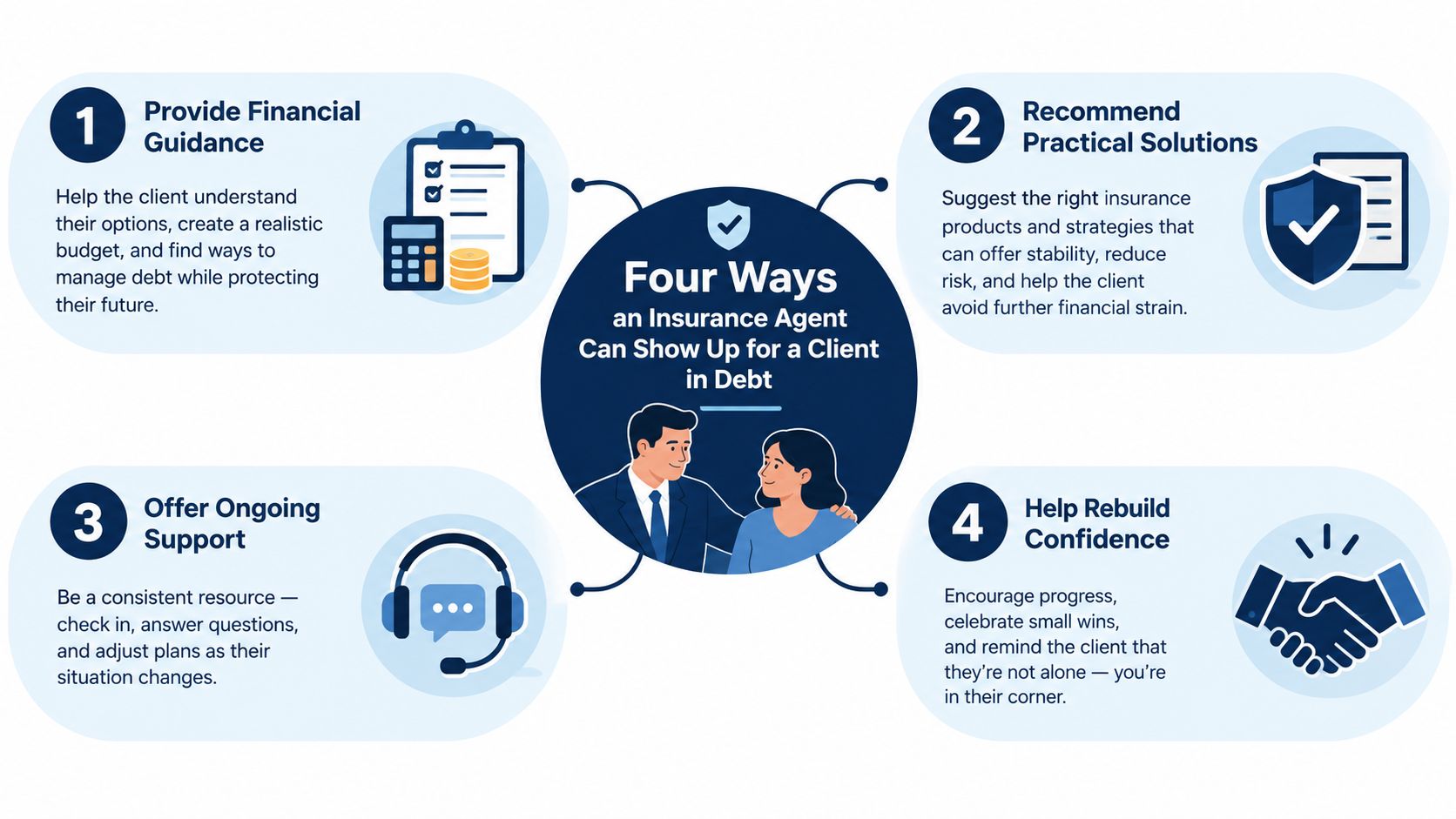
Four Ways an Insurance Agent Can Show Up for a Client in Debt
An insurance agent can contribute in four practical ways. Each option depends on the client's existing coverage, underwriting, product terms, and state rules. None gives the agent authority to negotiate a card balance.
1. Review payment protection
Some credit insurance or debt-protection products may suspend payments, cover minimum payments, or pay a balance after a qualifying event such as death, disability, or involuntary unemployment. A client who has little income flexibility may value that continuity, but the agent should explain the trigger, waiting period, benefit cap, premium, and exclusions before recommending anything.
For example, a worker who becomes disabled may need help keeping a card current while a disability claim is reviewed. The product might assist only if the disability meets the contract definition and the client follows the claim process.
2. Examine existing life and disability policies
An existing permanent life policy may include a cash value, policy-loan feature, or accelerated death benefit. These features can sometimes provide access to funds, but they can also reduce the death benefit, create interest charges, affect policy performance, or produce tax consequences.
A client shouldn't treat available cash value as free money. The agent should provide a current illustration and explain what happens if the loan remains unpaid or the policy lapses.
3. Reassess premium allocation
A household may be paying for coverage that no longer fits its needs. An agent can review whether a permanent policy, rider, or premium structure remains suitable and whether any lawful change could redirect cash toward an emergency reserve or debt repayment.
That review must protect essential coverage first. Reducing a premium without understanding the effect on guarantees, benefits, or lapse risk can create a larger problem than the card balance.
4. Make qualified referrals
An agent can identify when the problem is primarily a debt-management issue and refer the client to a nonprofit credit counselor, financial coach, or attorney. The agent can also coordinate beneficiary reviews so insurance proceeds reach the intended people and the household understands how those proceeds may support surviving family members.
The Federal Trade Commission's debt guidance advises consumers to ask card issuers about lower interest rates and affordable payment plans. The National Foundation for Credit Counseling also notes that cardholders facing financial crisis may ask about adjusted due dates or hardship plans. These steps belong in the debt conversation, even when an agent remains involved in the insurance review.
How Debt Protection and Credit Insurance Actually Work
Debt protection doesn't normally pay because a cardholder feels overwhelmed. It responds to a contract-defined event. Depending on the product, that event may be death, disability, or involuntary unemployment. The policy may then make specified payments, suspend required payments, or pay an amount toward the balance.
The claim follows the contract
A typical claim requires notice, documentation, and proof that the event meets the policy definition. A waiting period may apply, and the insurer may limit the benefit to a portion of the balance, a specific payment amount, or a stated maximum. Coverage can also stop when the account is closed, the balance is repaid, or another policy condition applies.
Common exclusions can include voluntary job loss, pre-existing conditions, self-inflicted injuries, failure to remain eligible, and balances above the policy maximum. The exact wording controls. A sales explanation isn't a substitute for the certificate, policy, or disclosure.
The Government Accountability Office's review of credit insurance warns that the consumer-cost-to-benefit ratio can be substantial and describes concerns about limited oversight. That makes a comparison with emergency savings and direct repayment essential. A product that pays only after a qualifying event won't solve interest accumulation during ordinary months.
Coverage types differ
Single-purchase products, sometimes called credit life or credit disability insurance, may be tied to a particular loan or financed balance. Open-end coverage attaches to a revolving card account and may calculate premiums or benefits according to the account's terms. Names vary, so a client should focus on the actual trigger and benefit rather than the label.
| Product Type | Qualifying Event | Typical Coverage Cap | Common Exclusion |
|---|---|---|---|
| Credit life | Death covered by the contract | Contract-defined amount toward the eligible balance | Policy exclusions or an ineligible account status |
| Credit disability | Qualifying disability | Specified payments or a limited benefit | Pre-existing condition or failure to meet the disability definition |
| Involuntary unemployment protection | Involuntary job loss | Payments for a defined period or up to a stated maximum | Voluntary resignation or termination excluded by the contract |
| Open-end card debt protection | Event listed in the card agreement | Account-specific payment or balance limit | Charges or balances outside the eligibility rules |
An agent should show the premium separately from the card payment and explain whether the premium changes as the balance changes. The client can then compare the cost of protection with building savings or paying principal faster.
Using Policy Features Versus Building a Payoff Plan
A policy feature can be useful, but it isn't automatically the cheapest route. A client deciding how to handle a revolving balance should compare four paths: borrowing against permanent life insurance, using an accelerated death benefit if eligible, drawing from emergency savings, or following a structured snowball or avalanche plan.
A policy loan generally doesn't require a hard credit inquiry, but it creates interest and can reduce the death benefit. If the policy lapses with an unpaid loan, the client may face serious coverage and tax consequences. An accelerated death benefit can provide cash during a qualifying medical situation, yet it also reduces what beneficiaries may later receive and may affect other assistance or tax planning.
Emergency savings avoids a new loan and can stop card interest immediately, but draining the reserve can leave the household exposed to the next illness, repair, or job interruption. A payoff plan protects the policy's full value and keeps savings intact, but it requires consistent payments and enough monthly cash flow.
| Option | Cost | Credit Impact | Risk |
|---|---|---|---|
| Policy loan | Interest charged under the policy terms | Usually no hard inquiry | Reduced death benefit, policy lapse, or tax consequences |
| Accelerated death benefit | Benefit reduction and contract-specific effects | Generally not a card inquiry | Lower future death benefit and eligibility limits |
| Emergency savings | Lost liquidity and possible lost growth | No new card inquiry | Household may lack cash for a later shock |
| Snowball or avalanche plan | Card interest until repayment accelerates | Depends on payment history and utilization | Progress can stall if income falls |
A simple comparison can clarify the choice. Suppose a cardholder has a $7,000 balance, a policy loan is available at 6%, and the card charges 24% APR. The lower-rate loan may reduce interest in the short term, but the cardholder still needs to account for policy interest, the reduced death benefit, lapse risk, and the need to repay the loan. A direct payoff plan may cost more interest at first but preserve the policy.
For a structured comparison of payment arrangements, a client can review this credit card payment plan guide. The right choice depends on the client's timeline, liquidity, coverage needs, and willingness to accept policy risk.
Practical Steps for Working With an Agent on Debt
A productive meeting begins with documents, not a sales presentation. The client should gather recent card statements, minimum payments, interest rates, income details, emergency savings information, and every current insurance policy document.
Prepare the questions
The following checklist keeps the conversation focused:
- Confirm the license. Ask whether the agent holds the required state insurance license and which carriers the agent represents.
- Request written illustrations. For a rider, policy loan, accelerated benefit, or payment-protection product, request the premium, benefit, waiting period, exclusions, maximum, and effect on existing coverage in writing.
- Ask about alternatives. The agent should explain whether maintaining savings or using a direct repayment plan may fit better than buying another product.
- Check financial strength. Review the carrier through AM Best or a comparable independent rating source, while remembering that a rating doesn't guarantee a particular claim outcome.
- Identify the boundary. Ask the agent to flag matters requiring a credit counselor, financial planner, or attorney.
The client should also ask what happens if employment ends voluntarily, a medical condition existed before enrollment, a payment is late, or the account balance exceeds the benefit limit. Vague answers deserve a pause.
A referral can be useful when the household needs debt-specific guidance. Insurance professionals who want to connect clients with qualified resources can review a debt-relief referral program for insurance agents, while consumers should independently verify the credentials and fees of any referred provider.
Before signing: The client should leave with the documents, compare the proposal against the household budget, and avoid making a same-day decision under pressure.
Common Misconceptions and Red Flags to Watch For
An insurance product doesn't erase a credit card balance. Credit insurance pays only after a qualifying event and only according to the contract. Premiums add to the household's cost, and a product may provide no benefit during ordinary months when interest continues to accrue.
An insurance agent isn't automatically a debt negotiator, financial planner, or attorney. A universal life policy also isn't a quick debt solution merely because it may offer cash value or flexible premiums. The agent should provide a full illustration showing premiums, guarantees, charges, loan effects, and what happens if payments change.
Claims that deserve scrutiny
- “The policy will forgive the entire balance.” Ask which event triggers payment and whether the benefit is capped.
- “The coverage works for any job loss.” Check whether voluntary resignation, termination for cause, or a waiting period is excluded.
- “The policy loan is free.” Request the loan interest rate, repayment terms, and lapse consequences.
- “This must be signed today.” Take time to review disclosures and the applicable free-look period.
- “The agent handles every part of the debt.” Confirm whether the agent can provide debt counseling or only insurance services.
- “The new policy is the fastest way out.” Compare the proposal with savings, issuer hardship options, and a direct payoff plan.
The client should never rely on a promise of “debt forgiveness” without written terms. The same caution applies to a recommendation that increases premiums while leaving insufficient money for minimum payments, food, housing, or emergency reserves.
Legal Limits, State Rules, and Where to Go Next
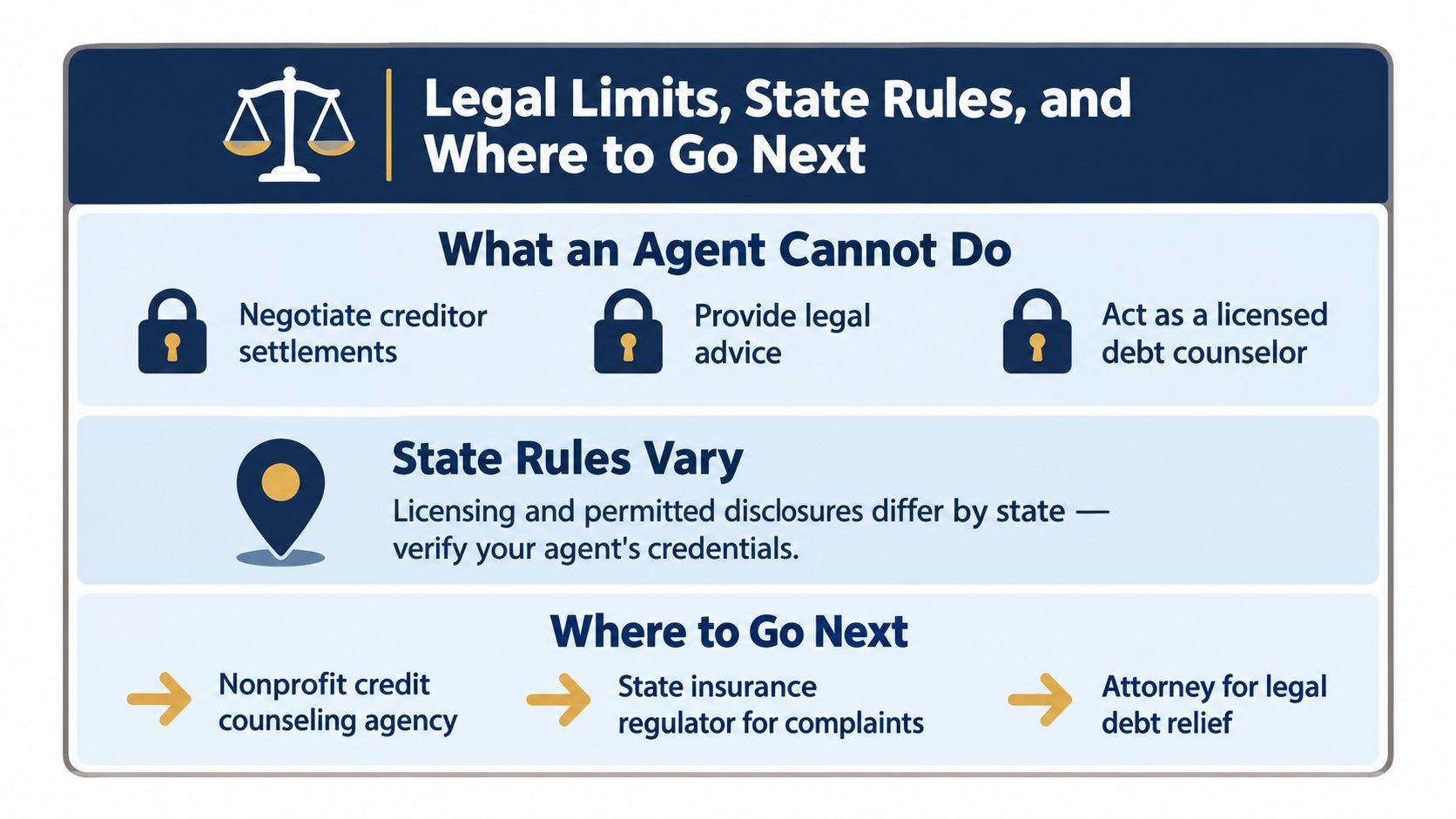
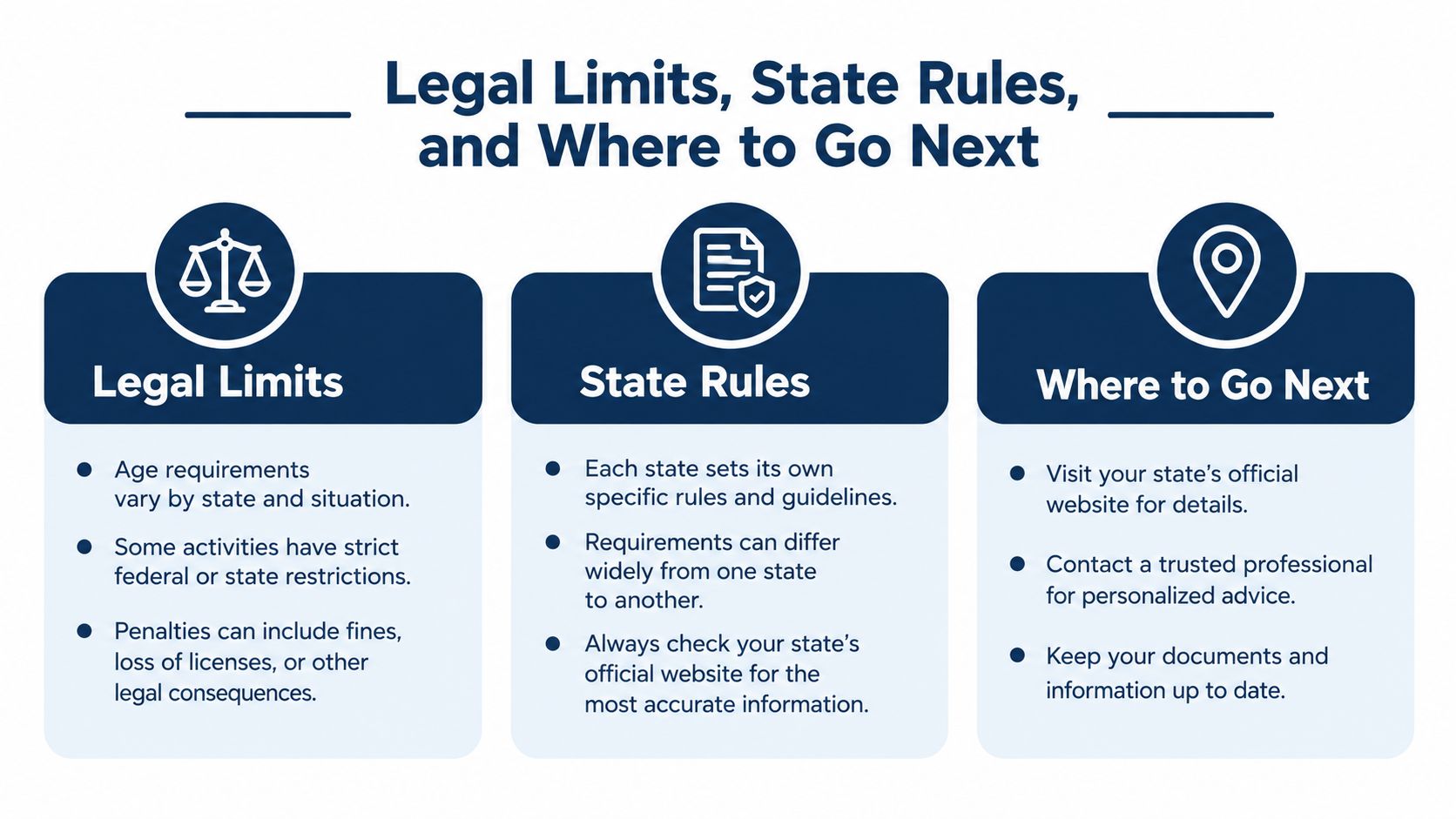
The agent's legal limits are central to the answer. An agent can't negotiate creditor settlements, provide legal advice, or act as a licensed debt counselor without the separate authority required for that service. State insurance departments oversee licensing and conduct, but licensing requirements and permitted disclosures can differ by state.
Death creates another area of confusion. There isn't one national answer about who owes a deceased cardholder's balance. Responsibility depends on state law and on whether the surviving person was a joint account holder, a co-signer, or only an authorized user. An authorized user generally isn't treated the same as a joint account holder, but the household should obtain state-specific advice before assuming the debt disappears or transfers.
Community-property rules matter
The CFPB guidance on debt after death explains that the estate is generally responsible when there is no co-signer, joint account holder, or other exception. It also identifies community-property states where a surviving spouse may have responsibility for certain debts. Those states are Alaska, Arizona, California, Idaho, Louisiana, Nevada, New Mexico, Texas, Washington, and Wisconsin, with Alaska requiring a special agreement for community-property treatment.
The CFPB guidance for surviving spouses says a spouse may be liable as a joint account holder and that community-property rules can create responsibility for debts incurred during marriage even when the card wasn't jointly held. That is why beneficiary planning and adequate life insurance can matter, but no agent should promise that proceeds will eliminate every obligation.
A client with a straightforward repayment issue may start with a card issuer or nonprofit credit counselor. A client facing disputed liability, probate, community-property questions, or collection activity should consult an attorney. Readers can also use this plain-language debt-relief guide to compare possible next steps without treating insurance as a substitute for debt advice.
Debt Help U offers free, no-login calculators and plain-language guides that help consumers estimate payoff timelines, compare repayment strategies, and understand formal debt-relief options before sharing contact details. Visit Debt Help U to evaluate the debt plan separately from any insurance recommendation and request a qualified third-party referral only if it fits the household's needs.
Related guides
- Debt settlement vs. consolidation vs. bankruptcy Four paths out of unmanageable debt, what each one costs, and what each one breaks. Real numbers on a $30,000 balance, not a pitch for any of them.
- How long will it take to pay off my credit card debt? Your minimum payment shrinks every month. Following it down is what turns a five-year balance into a thirty-five-year one.
- Debt snowball vs. avalanche: which one finishes faster Avalanche always pays less interest. The gap is smaller than the argument about it suggests. Run both on your own balances and see what it is worth.