Chapter 13 Means Test Calculator Explained
A homeowner can reach the point where the mortgage is current, yet credit cards, medical bills, and other unsecured debts have become impossible to manage. Bankruptcy forms then ask for income, expenses, household information, and repayment details, while the reader is left wondering what the numbers will mean for the family budget.
A Chapter 13 means test calculator helps turn that paperwork into two practical questions. How long might the repayment plan last, and what income could the plan require each month? It doesn't guarantee confirmation, a particular payment, or a specific result, but it can organize the financial picture before a debtor makes a major legal decision.
Table of Contents
- What the Chapter 13 Means Test Calculator Actually Does
- Key Inputs You Will Need Before Starting
- How the Two Official Forms Work Together
- Understanding Standardized Deductions and Allowable Expenses
- Commitment Period Explained and What Determines Plan Length
- From Calculator Output to Real Plan Payments and Timelines
- Comparing Chapter 13 with Settlement and Consolidation
- Common Calculator Mistakes and How to Verify Your Results
- Essential Bankruptcy and Means Test Terms Defined
- Frequently Asked Questions About the Chapter 13 Means Test
What the Chapter 13 Means Test Calculator Actually Does
Consider a homeowner named Dana. The mortgage is important to Dana, but missed credit card payments and collection calls are creating pressure. Dana opens a calculator expecting a simple approval message. Instead, the tool asks about household income, household size, state median income, and allowable expenses.
That process reflects the calculator's real purpose. It takes current monthly income, compares that income with the applicable state median for the household, and then estimates disposable income available for creditors. For above-median debtors, the calculation uses IRS standards and other permitted deductions rather than asking how much money remains after every household purchase.
The output isn't a pass-or-fail verdict in the way a loan application might be. Chapter 13 uses the means test to help shape repayment expectations. A calculator can indicate whether the case may involve the shorter or longer commitment period and can provide a starting point for the income available to fund the plan.
Practical rule: A calculator is a planning instrument, not a court order.
The distinction matters for a homeowner. A result that shows disposable income doesn't automatically state the final plan payment. Secured obligations, priority debts, trustee and attorney fees, arrears, and the treatment of creditors can affect the plan structure. The calculator also can't decide whether Chapter 13 is the best option, whether a proposed plan is feasible, or whether a particular expense is legally supportable.
The modern framework traces back to the Bankruptcy Abuse Prevention and Consumer Protection Act of 2005, which Congress enacted on April 20, 2005. That reform introduced formal means-testing mechanics and required debtors seeking bankruptcy relief to file a statement of current monthly income and means-test calculation.
Key Inputs You Will Need Before Starting
Accuracy starts before the calculator opens. A debtor should gather the records that support each answer, because an attractive result based on incomplete income or expenses can create problems later.
Income and household information
The core inputs usually include:
- Household size: The number of people included in the applicable household affects the state median comparison and the expense framework.
- State of residence: Median income figures and certain local standards depend on the state and location used for the case.
- Income sources: Wages, salary, overtime, bonuses, self-employment income, rental income, support received, benefits, and other included sources may need review.
- Recent income history: The calculation generally examines income received during the six full calendar months before filing, rather than relying only on the latest paycheck.
The lookback period helps create a consistent measure of recent income, but it can feel disconnected from a sudden job loss, commission change, or business slowdown. A debtor who recently experienced a major change should preserve documentation and obtain legal advice instead of changing figures informally.
Expense records and supporting documents
Useful records include pay stubs, tax returns, mortgage statements, car-loan or lease documents, insurance bills, tax notices, support orders, childcare records, medical bills, and bank statements. The exact documents needed can depend on the case and local practice.
A household preparing a checklist can also review the debt-to-income ratio guide to separate broad affordability questions from the more specific bankruptcy calculation.
The most efficient approach is to create one folder for income and another for expenses. That makes it easier to explain unusual deposits, seasonal earnings, household changes, or expenses that don't fit neatly into a standard category.
How the Two Official Forms Work Together
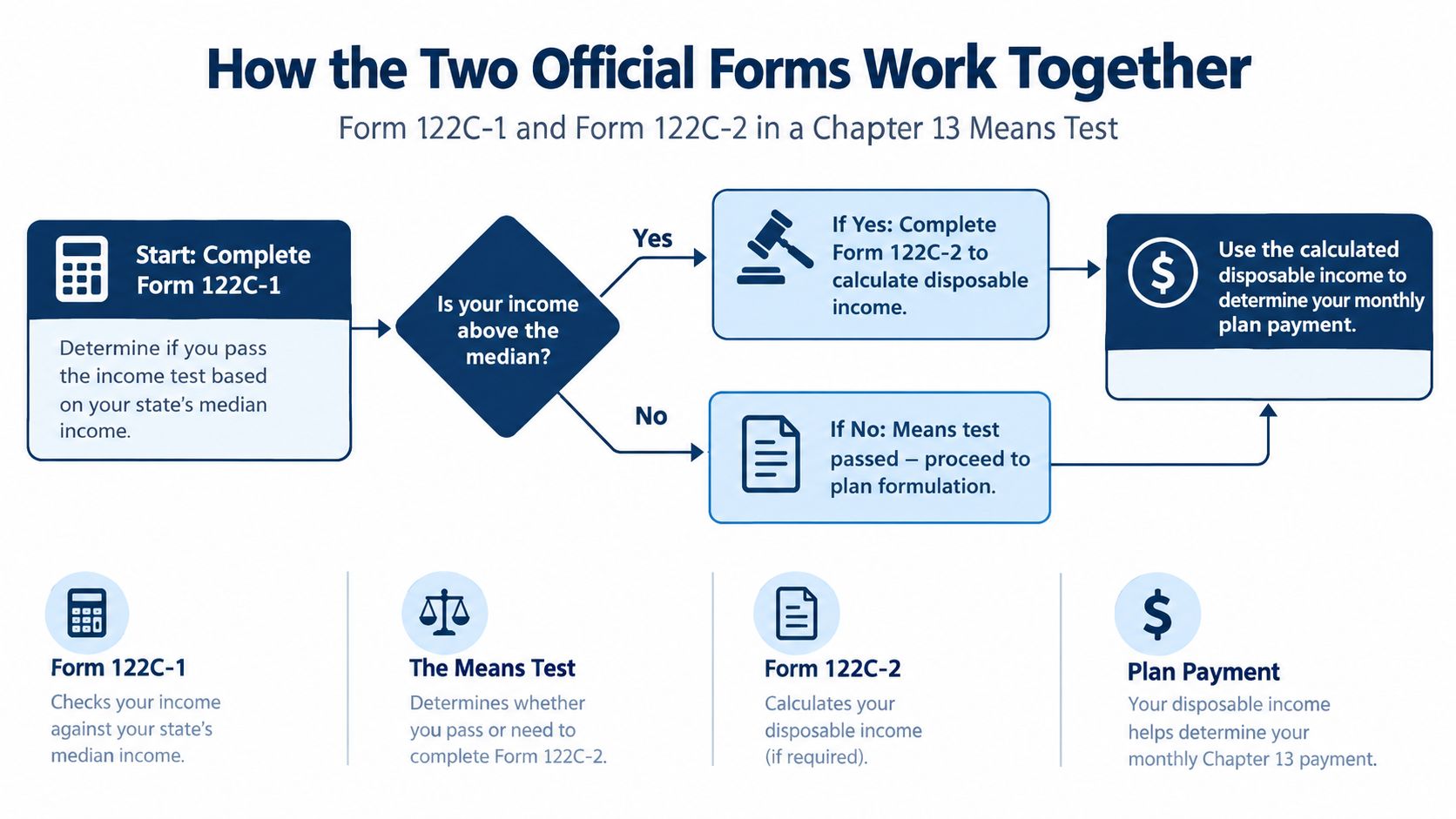
The Chapter 13 calculation has two connected stages, and each form answers a different question. Treating them as interchangeable is a common source of confusion.
Form 122C-1 establishes the income comparison and helps determine the applicable commitment period. In practical terms, it asks whether household income falls above or below the relevant state median for the household size. That output generally points toward a 36-month or 60-month commitment period, as described by the U.S. Trustee Program, which states that a debtor’s income level determines whether the plan runs three or five years.
Form 122C-2 performs the more detailed disposable-income calculation when required. It applies standardized deductions and other allowed expenses to estimate the amount that should form the repayment base for unsecured creditors.
The sequence looks like this:
- Determine current monthly income.
- Compare the household's income with the applicable median.
- Identify the applicable commitment period.
- Complete the detailed expense calculation when the rules require it.
- Use the resulting disposable-income figure as one important component of plan formulation.
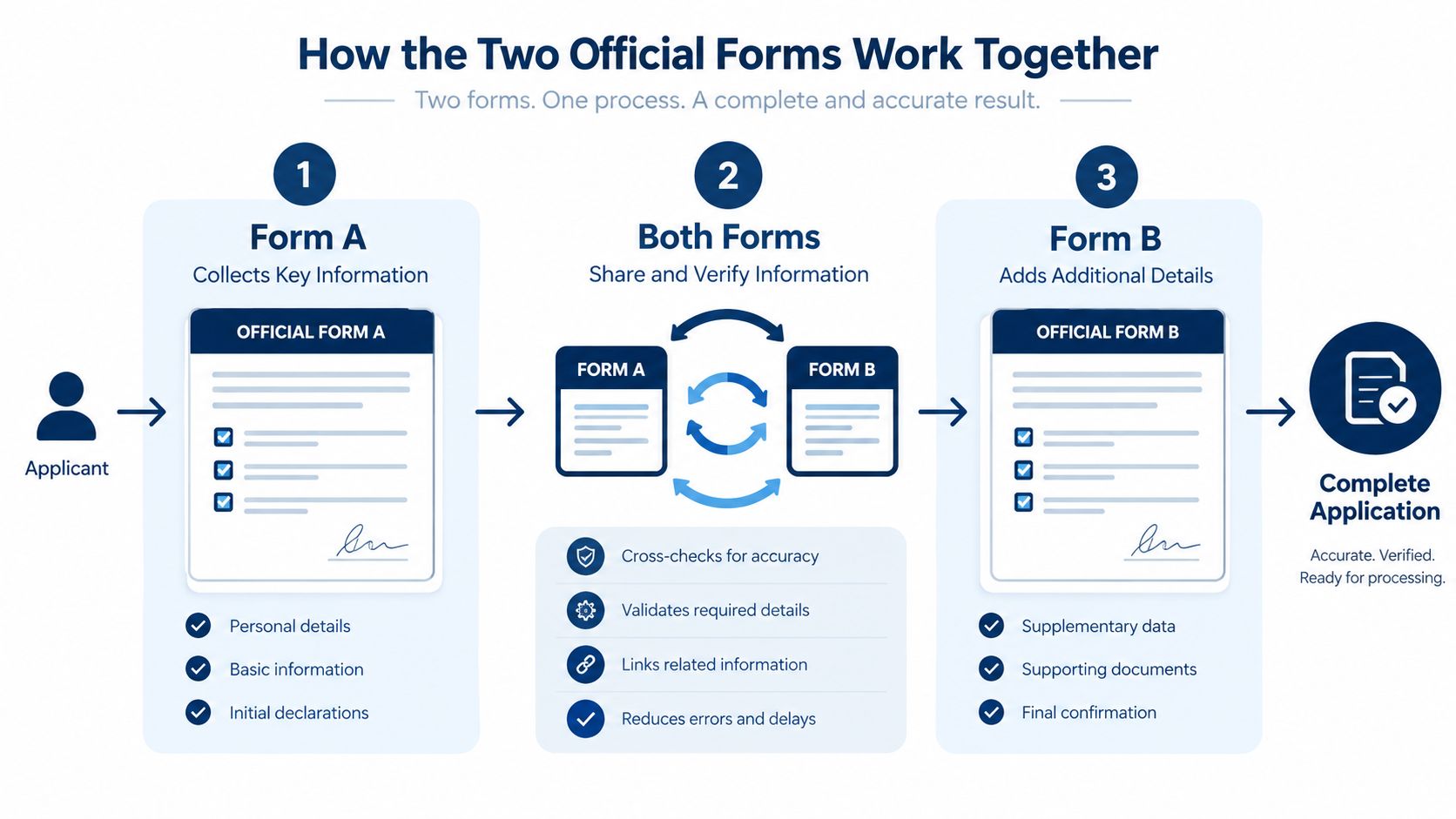
The forms therefore produce different outputs with a shared purpose. Form 122C-1 is closely tied to plan length. Form 122C-2 is closely tied to the monthly disposable-income calculation and the minimum repayment base. A calculator may display both results in one screen, but a debtor should still understand which figure answers which question.
The U.S. Trustee Program describes the Chapter 13 process as beginning with current monthly income and, for above-median debtors, using IRS National and Local Standards plus other allowed expenses to estimate disposable income. That estimate is a starting point, not a complete confirmed-plan calculation.
Understanding Standardized Deductions and Allowable Expenses
Gross income doesn't tell the whole story. The means test reduces income through categories that may use federal standards, local standards, or documented actual expenses.
Standards and actual costs
IRS National Standards commonly address everyday categories such as food, clothing, personal care, and miscellaneous living costs. Local Standards address categories such as housing and transportation. These amounts aren't a blank check for every dollar a household spends. The applicable rules determine whether a category uses a standard amount, an actual amount, or a limited combination of both.
Some expenses are more directly tied to the debtor's real obligations. Mortgage payments, vehicle loans, leases, insurance, priority tax obligations, and court-ordered support can require careful documentation and classification. A household with a large mortgage arrearage may also need to distinguish the regular ongoing payment from the amount needed to cure the arrears through the plan.
| Expense Category | Source Type | Example Items |
|---|---|---|
| Food and personal care | IRS National Standards | Groceries, clothing, personal care |
| Housing and utilities | IRS Local Standards and applicable actual expenses | Mortgage or rent, utilities |
| Transportation | IRS Local Standards and applicable actual expenses | Vehicle operating costs, loan or lease obligations |
| Healthcare | Applicable standards and documented costs | Insurance premiums, necessary medical expenses |
| Priority obligations | Documented legal debts | Certain taxes, child support, or alimony |
| Secured debt | Contract and case documentation | Mortgage arrears, vehicle loan payments |
The central question isn't whether an expense feels reasonable in the household budget. The question is whether the expense belongs in a permitted category and is supported by records.
Two families with similar income can therefore produce different disposable-income results. Household size, housing obligations, secured debt, support payments, healthcare needs, and priority debts can change the calculation. A debtor shouldn't remove a legitimate obligation merely because a calculator doesn't present it in an obvious way, but shouldn't add an unsupported expense either.
Commitment Period Explained and What Determines Plan Length
The commitment period is the time over which the debtor generally commits to make plan payments. It matters because a longer period changes the household's repayment schedule, budget, and exposure to future income changes.
| General result | Typical commitment period | Practical effect |
|---|---|---|
| Income below the applicable state median | 36 months | A shorter plan period may be available |
| Income above the applicable state median | 60 months | A longer commitment is generally required |
These 36-month and 60-month periods are identified in the official-form materials linked earlier. The result isn't merely a calendar label. It can affect how much income must be devoted to unsecured creditors and how long the homeowner must maintain the plan before receiving the intended discharge.
A below-median debtor may choose a longer plan in some circumstances. Extending the schedule can make the monthly payment more manageable, although a longer commitment also keeps the case active for more time. The choice requires a feasibility analysis, especially when mortgage arrears, vehicle obligations, or priority debts must be paid through the plan.
Above-median debtors generally face the longer commitment period, but the calculation still requires careful review of allowable expenses. A debtor whose necessary expenses exceed standardized assumptions may need to document those circumstances and present them through the proper legal process. A calculator can't decide whether an exception applies.
The plan length should be evaluated beside the monthly payment, not in isolation.
For a homeowner, the better question isn't, “Can the case last 36 months?” It is whether the proposed timeline gives the household enough room to maintain the mortgage, fund the plan, handle ordinary emergencies, and comply with every reporting and payment obligation. A bankruptcy attorney can assess the final commitment period alongside the rest of the proposed plan.
From Calculator Output to Real Plan Payments and Timelines
A disposable-income result is a starting point for a plan payment, not necessarily the amount that will appear on the trustee's payment notice. The confirmed payment must account for the debts and costs that the case is designed to address.
For example, a calculator might display $400 of monthly disposable income. That figure could become a higher plan payment after the proposed plan accounts for trustee compensation, attorney fees, mortgage arrears, vehicle claims, priority debts, and other required distributions. The final amount depends on the debtor's facts and the district's applicable rules, so a hypothetical screen result can't establish a guaranteed payment or creditor recovery.
What gets paid through the plan
A Chapter 13 plan can address several obligations at once:
- Mortgage arrears: Past-due amounts may be paid through the plan while ongoing mortgage payments continue under the required arrangement.
- Vehicle claims: A car loan or other secured debt may be treated according to the claim and plan structure.
- Priority debts: Certain tax and domestic-support obligations may receive required treatment.
- Unsecured claims: Credit card and medical claims may receive distributions based on the disposable-income calculation and the plan's other requirements.
- Administrative costs: Trustee and attorney fees can affect the amount the debtor must pay each month.
The plan timeline is also more than a payoff projection. The debtor must make payments consistently and comply with case requirements throughout the commitment period. A calculator can help a household test whether the proposed payment appears workable, but it can't predict income changes, creditor objections, amended claims, or court decisions.
For unsecured-debt planning outside bankruptcy, a separate debt payoff calculator can help compare balances, interest, and payment strategies. That tool answers a different question. The Chapter 13 means test addresses a court-supervised repayment framework, while a consumer payoff model estimates what happens when debts remain outside bankruptcy.
Comparing Chapter 13 with Settlement and Consolidation
A means-test result should sit inside a broader debt-relief decision. Chapter 13 isn't automatically better than settlement or consolidation, and those alternatives don't provide the same legal protections.
| Option | Cost structure | Credit impact | Timeline and protection |
|---|---|---|---|
| Chapter 13 | Court-supervised plan payments and case costs | Bankruptcy appears on the credit history | Multi-year commitment with the protection of the automatic stay after filing, subject to legal limits |
| Debt settlement | Negotiated settlements, program fees, and possible tax consequences | Missed payments and settlement activity can damage credit | Creditor participation isn't guaranteed, and collection activity may continue |
| Consolidation loan | New loan payment, interest, and possible fees | May add a new account and depends on qualification | One payment may simplify bills, but the loan doesn't create bankruptcy protections |
Chapter 13 offers a formal structure. The automatic stay can pause many collection actions after filing, and the court supervises the treatment of covered debts. In exchange, the debtor must sustain a multi-year repayment commitment and follow the plan and court rules.
Settlement works through negotiation. Creditors may accept less than the full balance, but they don't have to agree. A debtor may also face collection pressure while saving funds for negotiations, and forgiven debt can create tax questions.
Consolidation replaces several debts with a new obligation. It may simplify billing when the borrower qualifies for suitable terms, but it doesn't erase the underlying repayment responsibility. A homeowner also needs to consider whether a new payment is realistic alongside the mortgage and household costs.
Readers comparing chapters can review this Chapter 7 and Chapter 13 comparison before relying on a calculator result. The right choice depends on debt type, income stability, property goals, legal protections, and the household's ability to complete the chosen strategy.
Common Calculator Mistakes and How to Verify Your Results
A calculator can process incorrect information perfectly. The following quality check catches many avoidable errors before a debtor relies on the output.
Review the income figure
- Wrong period: Using only the current paycheck can ignore the required six-full-calendar-month review. Rebuild the income total from records covering the relevant lookback.
- Missing sources: Bonuses, side work, rental income, support received, or self-employment earnings can change the average. Review bank deposits and tax records against pay stubs.
- Recent job loss: A lower current paycheck may not immediately replace the earlier lookback income. Preserve termination records, new pay information, and evidence of the change for an attorney to evaluate.
Review the household and expenses
- Incorrect household size: Count the household consistently with the applicable legal rules. A spouse's filing status and income can require special analysis.
- Unsupported actual expenses: Don't replace an IRS standard with a household's preferred number without confirming that the category permits actual costs.
- Overlooked obligations: Mortgage arrears, secured loans, insurance, taxes, support, and necessary healthcare can materially affect plan formulation.
Verification step: Reconcile every major input to a document, then ask a bankruptcy attorney to review any result close to the median threshold or any disposable-income figure that seems unexpectedly high or low.
A preliminary calculator is useful for organizing questions. It isn't a substitute for reviewing official forms, local requirements, claim treatment, exemptions, and plan feasibility with qualified counsel.
Essential Bankruptcy and Means Test Terms Defined
- Automatic stay: The legal protection that generally pauses many collection actions when a bankruptcy case begins. It matters because Chapter 13 offers structure beyond a payment calculation.
- Commitment period: The general period over which the debtor commits to make plan payments. The means-test output commonly points toward 36 or 60 months, as explained in the commitment-period section.
- Current monthly income: The income measure built from the applicable recent lookback period. It isn't always the same as the latest monthly paycheck.
- Disposable income: The amount remaining after permitted deductions. It helps establish the repayment base, but it isn't automatically the final plan payment.
- Form 122C-1: The Chapter 13 form used for the income and median comparison. Its role is discussed in the section on the two official forms.
- Form 122C-2: The detailed Chapter 13 calculation used to determine disposable income after applicable deductions.
- Priority debt: A debt category that bankruptcy law may require the plan to treat before general unsecured claims, such as certain taxes or support obligations.
- Secured debt: Debt connected to collateral, such as a home or vehicle. Payment treatment can affect the final plan structure.
- State median income: The comparison point based on household size and state. It helps determine the applicable calculation path and commitment period.
- Unsecured debt: Debt without collateral securing payment, such as many credit card and medical balances. The means-test result can influence the minimum repayment base for these claims.
Frequently Asked Questions About the Chapter 13 Means Test
Does every Chapter 13 filer complete the same calculation?
Chapter 13 filers use the applicable official forms, but the detailed calculation can depend on the household's income position and circumstances. Above-median debtors generally face the standardized-deduction analysis described earlier.
What happens if a debtor recently lost a job?
The six-month lookback can include income from before the job loss. A debtor shouldn't alter the historical figures, but should document the employment change and ask counsel how current income affects feasibility and the filing decision.
Is self-employment income treated differently?
Self-employment requires careful accounting because the calculation may need business income and legitimate business expenses rather than a simple wage figure. Bank records, invoices, tax filings, and operating expenses can help support the calculation.
Does a spouse's income count if only one spouse files?
Marital status, household circumstances, and separation can affect how income is reported. A nonfiling spouse's income shouldn't be included or excluded based on assumption alone. The household should obtain case-specific legal advice.
Does the means test decide the final plan payment?
No. It provides important income and disposable-income information, but the final plan also has to account for secured claims, priority debts, administrative costs, arrears, and feasibility. The court and trustee evaluate the proposed plan under the governing rules.
A debtor who has gathered the records can use the calculator to identify questions, not to promise an outcome. The strongest next step is a review of the completed inputs, official forms, and proposed budget before filing.
Debt Help U offers plain-language debt guides and no-login calculators that help consumers compare payoff strategies and understand how bankruptcy, settlement, and consolidation differ. Visit Debt Help U to organize the numbers privately, review available options, and decide what questions to take to a qualified professional.
Related guides
- Chapter 7 vs. Chapter 13 bankruptcy: which one applies to you One wipes qualifying debt in a few months. The other reorganizes it over three to five years. Your income and what you own decide which is even available.
- Debt settlement vs. consolidation vs. bankruptcy Four paths out of unmanageable debt, what each one costs, and what each one breaks. Real numbers on a $30,000 balance, not a pitch for any of them.
- How long will it take to pay off my credit card debt? Your minimum payment shrinks every month. Following it down is what turns a five-year balance into a thirty-five-year one.